
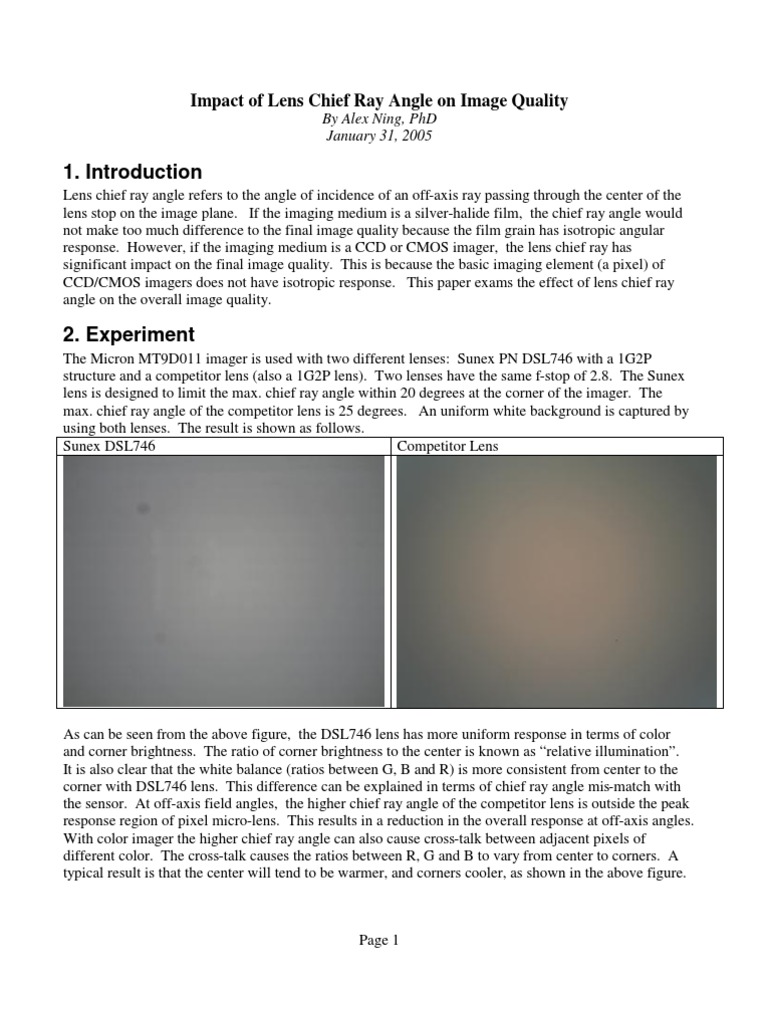
The journey of a lensmaker is defined by a single thread of insight: the Chief Ray Angle. This measure of how a principal ray enters and travels through a lens body sets the stage for where and how every point on an image will come into sharp focus. In this article, we follow a lensmaker’s path as they uncover how the Chief Ray Angle reshapes strategies for focus, field coverage, and overall image clarity.
Origins of the Chief Ray Angle
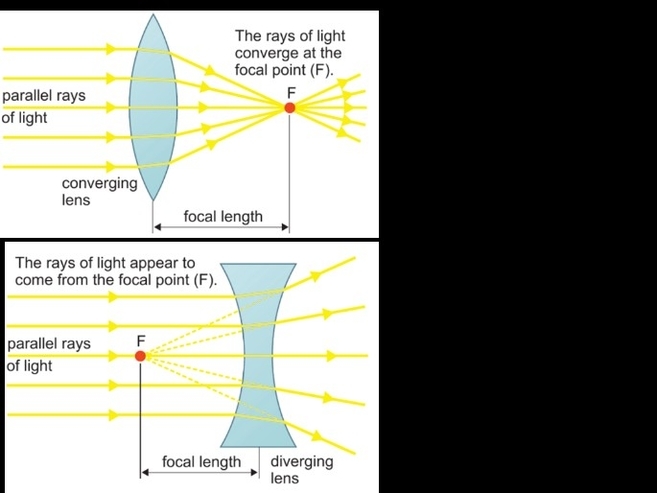
Early optical design wrestled with how light from off-axis points bends as it passes through apertures and curved surfaces. The Chief Ray Angle encapsulates the direction of the ray that passes through the center of the aperture stop and reaches the image plane, anchoring predictions about where the image will be sharpest. By examining how this angle changes with focal length, field position, and lens geometry, designers create models that map performance across the entire frame.
Impact on Focus, Depth of Field, and Resolution
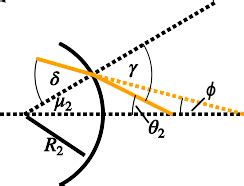
When the Chief Ray Angle varies across the field, even well-corrected lenses can exhibit shifts in the focal plane. This influences field curvature, edge sharpness, and distortion in ways that are subtle yet consequential for photographers and engineers alike. By tracking the Chief Ray Angle, designers anticipate how focus will behave at the extreme edges versus the center, enabling targeted adjustments to element spacing, coating strategies, and aspheric profiles to achieve consistent resolution.
Practical Implications for Modern Lens Design
In today’s multi-element optics, the Chief Ray Angle informs tolerancing, assembly alignment, and quality control. It guides how manufacturers position elements during cementing, the choice of aperture stops, and the calibration of autofocus and manual focus systems. As imaging sensors evolve toward higher resolution and wider fields of view, the Chief Ray Angle remains a compass for balancing sharpness across the frame with practical manufacturing constraints.
Key Points
- Chief Ray Angle provides a practical predictor of where in the image the sharpest detail can be expected across the field.
- Small shifts in this angle can cascade into changes in focus plane and field curvature, requiring design tweaks.
- Manufacturing decisions—from element spacing to alignment jigs—often hinge on accurate interpretation of the Chief Ray Angle.
- Measurement and simulation tools, including ray-tracing and interferometry, are used to validate Chief Ray Angle effects during prototyping.
- Education and visualization tools help designers and students grasp how the Chief Ray Angle shapes real-world image quality.
What is the Chief Ray Angle, and how is it defined in a lens system?
+The Chief Ray Angle is the angular direction of the chief ray—the ray that passes through the center of the aperture stop and from the object field to the image plane. It helps designers predict where light will converge across the image and how field position affects focus and sharpness.
  <div class="faq-item">
    <div class="faq-question">
      <h3>How does the Chief Ray Angle influence autofocus performance?</h3>
      <span class="faq-toggle">+</span>
    </div>
    <div class="faq-answer">
      <p>Autofocus systems rely on predictable optical paths across the field. Variations in the Chief Ray Angle can shift the effective focal plane at off-center positions, requiring the AF algorithm to compensate or for lens designers to adjust element placement to maintain consistent focus across the frame.</p>
    </div>
  </div>

  <div class="faq-item">
    <div class="faq-question">
      <h3>Can the Chief Ray Angle be altered after manufacturing?</h3>
      <span class="faq-toggle">+</span>
    </div>
    <div class="faq-answer">
      <p>In practice, the Chief Ray Angle is a property determined by the lens geometry and mounting. While individual elements can be adjusted during assembly to tune performance, the angle itself isn’t something you “change” in post-production; corrections focus on mitigating its effects rather than rewriting the underlying geometry.</p>
    </div>
  </div>

  <div class="faq-item">
    <div class="faq-question">
      <h3>Why is the Chief Ray Angle important for edge sharpness?</h3>
      <span class="faq-toggle">+</span>
    </div>
    <div class="faq-answer">
      <p>Edge sharpness is sensitive to how rays from off-axis points traverse the lens. The Chief Ray Angle determines the entry path of these rays, influencing how quickly and where aberrations accumulate toward the frame edges. Understanding this angle helps designers shape optics that maintain uniform sharpness from center to edge.</p>
    </div>
  </div>
</div>